Lead qualification isn’t just a step in the sales process—it’s the foundation. Get it right, and your conversion rates soar. Get it wrong, and your sales team chases dead ends. Let’s break down the ultimate guide to mastering lead qualification in today’s competitive market.
What Is Lead Qualification and Why It Matters

At its core, lead qualification is the process of determining whether a potential customer (a lead) is truly ready and likely to purchase your product or service. It’s not about collecting names—it’s about identifying the right names. Without proper qualification, sales teams waste time on prospects who lack budget, authority, need, or timeline (the famous BANT framework).


Defining a Qualified Lead
A qualified lead isn’t just someone who filled out a form. They must meet specific criteria that align with your ideal customer profile (ICP). This includes firmographic data (company size, industry), behavioral signals (website visits, content downloads), and demographic alignment (job title, location).
- Marketing Qualified Lead (MQL): Engaged with content but not yet sales-ready.
- Sales Qualified Lead (SQL): Vetted by sales as ready for a direct conversation.
- Product Qualified Lead (PQL): Used your product (e.g., free trial) and shown intent to upgrade.
“Not all leads are created equal. The key is to separate the tire-kickers from the true buyers.” — HubSpot
The Cost of Poor Lead Qualification
When sales teams pursue unqualified leads, the ripple effects are costly. According to Salesforce’s State of Sales Report, 50% of sales time is spent on unproductive activities—many of which stem from poor lead qualification. This leads to longer sales cycles, lower win rates, and frustrated reps.
- Wasted sales effort on leads with no budget.
- Marketing and sales misalignment due to unclear criteria.
- Lower ROI on lead generation campaigns.
Lead Qualification Frameworks You Need to Know
Frameworks provide structure to the qualification process. They help teams ask the right questions and make consistent decisions. While BANT is the most famous, newer models have emerged to reflect modern buying behaviors.
BANT: Budget, Authority, Need, Timeline
Developed by IBM and popularized by Salesforce, BANT remains a gold standard. It evaluates four critical factors:
- Budget: Does the prospect have the financial resources?
- Authority: Is the contact a decision-maker or influencer?
- Need: Do they have a pain point your solution solves?
- Timeline: When do they plan to make a decision?
While effective, BANT has limitations. It’s often seen as too rigid for complex, consensus-driven sales. Still, it’s a solid starting point for many B2B companies.
CHAMP: Challenges, Authority, Money, Prioritization
CHAMP flips the script by prioritizing the prospect’s challenges over their budget. This consultative approach aligns better with modern sales, where empathy and problem-solving matter more than pushing a product.
- Challenges: What problems are they trying to solve?
- Authority: Who has the power to say yes?
- Money: Can they afford the solution?
- Prioritization: How urgent is the issue?
CHAMP is especially useful in industries where the pain point drives the purchase, not just the budget.
MEDDIC: Metrics, Economic Buyer, Decision Criteria, Decision Process, Identify Pain, Champion
Used by high-growth tech companies like Snowflake and DocuSign, MEDDIC is a rigorous, enterprise-focused framework. It’s ideal for long sales cycles with multiple stakeholders.
- Metrics: How will success be measured?
- Economic Buyer: Who controls the budget?
- Decision Criteria: What factors will influence the choice?
- Decision Process: What steps must be followed to close?
- Identify Pain: What’s driving the need for change?
- Champion: Who inside the organization will advocate for you?
According to Gartner, companies using MEDDIC see a 30% increase in win rates for complex deals.
Lead Qualification in the Digital Age
The way buyers research and purchase has changed. Today’s prospects are 60% through their journey before they even speak to a sales rep (per Forrester). This means lead qualification must start earlier—and be more data-driven.
The Role of Behavioral Data
Behavioral signals—like visiting pricing pages, downloading case studies, or watching demo videos—are strong indicators of intent. Tools like HubSpot Sales Hub and SalesLoft track these actions and score leads accordingly.
- High-intent pages visited (e.g., /pricing, /contact-sales).
- Email engagement (opens, clicks).
- Time spent on key content.
When combined with firmographic data, behavioral insights create a powerful lead scoring model.
Lead Scoring: Turning Data into Action
Lead scoring assigns numerical values to leads based on their profile and behavior. The higher the score, the more sales-ready they are. This helps prioritize outreach and improve conversion rates.
- Demographic Scoring: Job title, company size, industry.
- Behavioral Scoring: Page visits, content downloads, email engagement.
- Negative Scoring: Unsubscribes, bounced emails, irrelevant job titles.
A well-tuned lead scoring model can increase sales productivity by up to 30%, according to MarketingProfs.
Marketing and Sales Alignment in Lead Qualification
One of the biggest barriers to effective lead qualification is misalignment between marketing and sales. Marketing generates leads; sales closes them. But without shared definitions and processes, leads fall through the cracks.
Defining MQLs and SQLs Together
The first step to alignment is agreeing on what constitutes a Marketing Qualified Lead (MQL) and a Sales Qualified Lead (SQL). This should be a collaborative process involving both teams.
- Marketing agrees to only pass leads that meet specific criteria (e.g., visited pricing page + downloaded whitepaper).
- Sales agrees to follow up within 24 hours of receiving an SQL.
- Regular sync meetings to review lead quality and adjust criteria.
“Alignment isn’t a one-time meeting—it’s an ongoing conversation.” — SiriusDecisions
Service Level Agreements (SLAs) Between Teams
A formal SLA sets expectations and accountability. It defines how many leads marketing will deliver, the quality standards, and how quickly sales will respond.
- Marketing SLA: Deliver 100 MQLs/month with a lead score of 75+.
- Sales SLA: Contact 90% of SQLs within 24 hours.
- Shared KPIs: Conversion rate from MQL to SQL, cost per SQL.
Companies with formal SLAs see 32% higher revenue growth, per CEB (now Gartner).
Lead Qualification Tools and Technology
Manual lead qualification doesn’t scale. The right tools automate scoring, routing, and follow-up—freeing up time for high-value conversations.
CRM Systems: The Backbone of Qualification
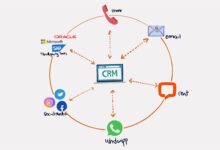
A CRM like Salesforce or Zoho CRM centralizes lead data, tracks interactions, and enables automation. It’s where qualification criteria are applied and SQLs are handed off to sales.
- Automated lead assignment based on territory or expertise.
- Custom fields for BANT/CHAMP/MEDDIC criteria.
- Integration with marketing platforms for seamless data flow.
Marketing Automation Platforms
Tools like Marketo, HubSpot Marketing Hub, and Pardot nurture leads with personalized content and score them based on engagement.
- Drip email campaigns to move leads down the funnel.
- Dynamic content based on lead behavior.
- Automated handoff to sales when lead score threshold is met.
AI-Powered Lead Qualification Tools
AI is transforming lead qualification. Platforms like Outreach and Gong use machine learning to predict lead intent and recommend next steps.
- Predictive lead scoring using historical data.
- Conversation intelligence to analyze sales calls for qualification cues.
- Chatbots that qualify leads in real-time on your website.
According to McKinsey, companies using AI in sales see a 40–60% increase in lead conversion rates.
Common Lead Qualification Mistakes and How to Avoid Them
Even experienced teams make mistakes. Recognizing these pitfalls is the first step to avoiding them.
Over-Reliance on Demographics
Focusing only on job title or company size ignores intent. A junior employee with high engagement may be more valuable than a C-level exec who never opens emails.
- Solution: Combine demographic data with behavioral signals.
- Use lead scoring models that weigh both equally.
Qualifying Too Early or Too Late
Calling a lead too early feels pushy; waiting too long means losing them to competitors. Timing is everything.
- Solution: Use engagement triggers (e.g., second visit to pricing page) to signal readiness.
- Implement automated nurture sequences to warm up leads before sales contact.
Ignoring Negative Signals
Not all signals are positive. Ignoring unsubscribes, bounced emails, or lack of engagement leads to wasted effort.
- Solution: Build negative scoring into your model.
- Automatically deprioritize or remove leads with consistent inactivity.
Advanced Lead Qualification Strategies for 2024
As buyer behavior evolves, so must qualification strategies. Here are cutting-edge approaches that top-performing companies are using.
Account-Based Qualification
Instead of focusing on individual leads, account-based qualification looks at the entire target account. It’s ideal for enterprise sales where multiple stakeholders are involved.
- Identify key accounts based on strategic fit.
- Map decision-makers and influencers within the account.
- Engage the account with personalized content and outreach.
According to ABM Leadership Alliance, 87% of companies using ABM report higher ROI than traditional marketing.
Intent Data for Proactive Qualification
Third-party intent data providers (like 6sense and Gombi) track online behavior across the web to identify companies actively researching solutions like yours.
- See when target accounts are comparing vendors.
- Engage them with timely, relevant messaging.
- Shorten sales cycles by reaching out at the right moment.
Intent data can improve lead-to-customer conversion by up to 200%, per IDC.
Conversational AI for Real-Time Qualification
AI chatbots on your website can qualify leads 24/7, asking BANT or CHAMP questions in natural language.
- Qualify leads during off-hours.
- Collect key information before handing off to sales.
- Reduce response time from hours to seconds.
Companies using conversational AI report a 50% increase in qualified leads, according to Drift.
Measuring the Success of Your Lead Qualification Process
You can’t improve what you don’t measure. Tracking the right KPIs helps you refine your process and prove ROI.
Key Metrics to Track
These metrics give insight into the health of your qualification process:
- MQL to SQL Conversion Rate: Measures how well marketing is qualifying leads.
- SQL to Opportunity Rate: Shows how effective sales is at converting qualified leads.
- Lead Response Time: Faster response = higher conversion (leads are 7x more likely to convert if contacted within 5 minutes).
- Customer Acquisition Cost (CAC): Lower CAC means better lead quality.
- Win Rate: Higher win rates indicate better alignment between lead quality and sales capability.
Continuous Improvement Through Feedback Loops
Regularly gather feedback from sales teams on lead quality. Are the leads they receive truly qualified? What’s missing?
- Hold monthly lead review meetings.
- Adjust scoring models based on win/loss data.
- Update ICPs as market conditions change.
“The best lead qualification systems are not static—they evolve with the business.” — Revenue.io
What is lead qualification?
Lead qualification is the process of evaluating potential customers to determine if they are a good fit for your product or service based on criteria like budget, authority, need, and timeline.
What are the most common lead qualification frameworks?
The most widely used frameworks are BANT (Budget, Authority, Need, Timeline), CHAMP (Challenges, Authority, Money, Prioritization), and MEDDIC (Metrics, Economic Buyer, Decision Criteria, Decision Process, Identify Pain, Champion).
How does lead scoring work?
Lead scoring assigns points to leads based on demographic and behavioral data. High scores indicate sales-ready leads, helping teams prioritize outreach.
What’s the difference between MQL and SQL?
A Marketing Qualified Lead (MQL) has shown interest but isn’t ready to talk to sales. A Sales Qualified Lead (SQL) has been vetted and is ready for direct sales engagement.
How can AI improve lead qualification?
AI can analyze behavior, predict intent, and automate follow-ups. Tools like chatbots and predictive scoring help identify high-potential leads faster and more accurately.
Lead qualification is not a one-time task—it’s a strategic, ongoing process that sits at the heart of revenue growth. From classic frameworks like BANT to AI-powered intent analysis, the tools and techniques have evolved. But the goal remains the same: to ensure sales teams spend their time on the right people. By aligning marketing and sales, leveraging data, and continuously optimizing, businesses can turn lead qualification into a competitive advantage. The result? Higher conversion rates, shorter sales cycles, and sustainable growth.
Further Reading:
